Skip to content
Windows are one of the first things people notice about a home or business. They are also the first thing the South Shore’s coastal climate goes to work on. Salt spray off the Atlantic, spring pollen, summer humidity, and winter road salt all leave residue that cuts natural light and wears on glass, screens, and frames over time. Knowing the best time to clean windows helps you protect that investment and keep your property looking sharp year-round.
For homeowners and businesses in Norwell, Hingham, Duxbury, and Marshfield, there is no single perfect month. The best time of year to clean windows depends on where your property sits, what grows around it, and how fast contaminants build up on the glass. A consistent schedule beats waiting until the windows look bad — by then, the residue has already had months to bond.
Below you’ll find the seasonal timing we recommend, how each season affects your glass, and how often homes and businesses in this area actually need service.
Key Takeaways
- Late spring and early fall are the best time to clean windows on the South Shore. Both offer mild weather and clear away seasonal buildup before it sets.
- Consistency matters more than timing. Most homes do well with two professional cleanings a year. Coastal and heavily wooded properties usually need more.
- Every season leaves something different behind — winter road salt, spring pollen, summer salt haze, fall leaf tannins.
- Clean windows are maintenance, not just appearance. Regular service prevents permanent staining, protects seals and frames, and catches small problems early.
- Weather affects results. Mild, overcast days produce the cleanest finish. Freezing temperatures and direct afternoon sun do not.
- Coastal homes benefit from all seasons window cleaning. Salt reaches waterfront glass far faster than it reaches inland glass.
- Local experience counts. A schedule built around this specific coastline works better than a generic one.
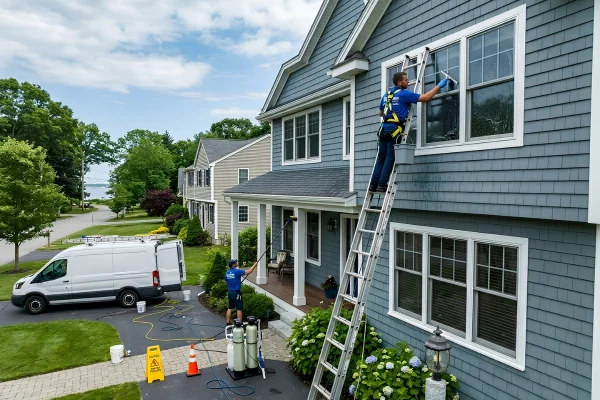
When Is the Best Time to Clean Windows?
The best time to clean windows is on a mild, dry, overcast day when the glass stays cool and cleaning solution doesn’t flash-dry. On the South Shore, that points to late spring and early fall. Both windows of the year combine workable weather with the right timing to strip off months of accumulated salt, pollen, and grime.
Calendar timing is only half of it, though. The best window cleaning schedule also accounts for coastal exposure, nearby trees, road traffic, and the age of your windows. Many properties here land on two to four cleanings a year.
Spring Cleaning Restores Windows After Winter
Spring is our busiest season for South Shore home window cleaning, and for good reason. Road salt, ocean spray, exhaust film, and moisture accumulate for months. The result is glass that looks dull well after the last snow melts.
A professional spring cleaning removes those contaminants before they stain or etch. It also gives you a clear look at damaged screens, worn seals, and failing caulk while repairs are still cheap.
One local wrinkle: pollen. Across Norfolk and Plymouth counties, pollen counts generally peak from late April into late May. You can track current levels through the <a href=”https://www.aaaai.org/global/nab-pollen-counts” target=”_blank” rel=”noopener”>National Allergy Bureau’s certified pollen counting stations</a>, which report daily counts by region. Clean your windows right before a heavy pollen drop and they’ll be yellow again within days. We usually steer spring clients toward late May or early June, once the worst of it has passed.
Fall Cleaning Prepares Windows for Winter
Fall clears out what summer leaves behind — humidity residue, coastal salt, insects, tree sap, and hard-water spotting. A cleaning in September or October protects glass and seals and has your home looking its best through the holidays.
There’s a practical reason to book before the cold arrives, too. Once temperatures drop, cold glass and fast-evaporating solution make good results harder to achieve, and ladder work on icy ground gets genuinely risky. Scheduling ahead of winter means the work gets done under conditions that produce a better finish.
Pairing spring and fall service is the best time of year to clean windows for most properties. It establishes a dependable rhythm, keeps glass clearer, and prevents the kind of buildup that becomes difficult to remove later.
How Each Season Affects Your Windows on the South Shore
Every season leaves its own signature on your glass. Understanding the pattern makes it easier to build the best window cleaning schedule for your specific property.
Winter: Salt, Road Grime, and Reduced Natural Light
Winter leaves the toughest buildup of the year. Coastal homes in Scituate, Cohasset, and Marshfield take constant salt spray off the Atlantic. Meanwhile, road salt and vehicle exhaust form a stubborn film on exterior glass. Interior condensation adds mineral deposits and streaking, especially on older or less efficient windows.
That buildup does more than blur the view. Salt residue etches glass and stains frames if it sits for months. Dirty windows also block daylight during the shortest days of the year and worsen glare from the low winter sun.
Winter isn’t the best time of year to clean windows, but it is a good time to assess condition and book early-spring service before the residue hardens.

Spring: Pollen, Rain, and Winter Cleanup
Spring is often considered the best time to clean windows because it clears away everything winter left. In Norwell, Hingham, and Weymouth, pollen is the main obstacle. Fine yellow pollen mixes with morning dew to form a sticky film that clings to glass.
Spring storms compound it. Rain washes dirt off roofs, gutters, and siding straight onto the windows below. Most homeowners are surprised to learn rain doesn’t clean glass — on dirty windows, it usually makes things worse. If your gutters are overflowing, that runoff hits your windows first.
Professional spring service restores clarity and strips corrosive residue before it can damage glass or frames.

Summer: Salt Air, Hard Water, and Insect Residue
Summer brings its own problems. Coastal breezes deposit microscopic salt particles on exterior glass, especially in Duxbury, Hull, and other waterfront communities. Even homes several miles inland develop a haze during dry stretches.
Irrigation overspray and well water leave hard-water mineral deposits behind. Those deposits are dissolved calcium and magnesium — the <a href=”https://www.usgs.gov/special-topics/water-science-school/science/hardness-water” target=”_blank” rel=”noopener”>USGS classifies most of eastern Massachusetts groundwater as moderately hard to hard</a>, which is why sprinkler spotting is so common here. Baked on in direct sun, those minerals get progressively harder to remove. Insects, tree sap, and bird droppings add stubborn staining, usually worst on south- and west-facing glass.
For coastal homes and properties with mature landscaping, a mid-summer visit is a worthwhile part of an all seasons window cleaning plan. It preserves the view and prevents permanent mineral staining.

Fall: Leaves, Organic Debris, and Winter Preparation
Fall is the most important season for preventative maintenance. As trees drop their leaves, organic debris collects in sills, screens, and frames. Wet leaves release tannins that stain painted surfaces and trap moisture against the window.
Dirt, spider webs, and leftover summer residue accumulate through autumn as well. Cleaning in early to mid-fall removes all of it and gives you a chance to inspect seals and screens before cold weather makes that work miserable.

Seasonal Window Cleaning Comparison
| Season | Primary Buildup | Why It Matters | Recommendation |
| Winter | Salt spray, road grime, condensation, exhaust film | Cuts daylight, increases glare, and prolonged salt exposure damages glass and frames | Inspect now, book service for early spring |
| Spring | Pollen, rain residue, winter grime | Blocks light and leaves a sticky film that hurts curb appeal | Schedule late spring, after peak pollen |
| Summer | Salt air, hard-water spots, insect residue | Mineral deposits and salt haze get harder to remove the longer they sit | Consider mid-summer service for coastal homes and irrigated properties |
| Fall | Leaves, tannins, spider webs, organic debris | Prevents staining and moisture damage heading into winter | Schedule early to mid-fall, before freezing temperatures |
Building a Window Cleaning Schedule That Works
A consistent window cleaning schedule protects your glass, maintains curb appeal, and heads off the buildup that causes lasting damage. The right frequency comes down to property type and location.
Recommended Frequency for Residential Properties
For most South Shore homes, two professional cleanings a year — one in late spring, one in early fall — is a solid baseline. See our residential window cleaning service for what’s included.
Homes close to the water in Scituate, Cohasset, and Marshfield generally need three per year because salt accumulates faster. Properties under heavy tree cover often want an extra fall visit to deal with tannin staining.
Interior glass usually needs attention once a year. Households with pets, young children, or heavy cooking often prefer twice.
Recommended Frequency for Commercial Properties
Commercial properties in Quincy, Weymouth, and Brockton typically need more frequent service than homes. Storefronts and offices with street-level exposure and customer-facing glass do best on a monthly or bi-monthly rotation. Dirty windows tell a customer something about your business before they reach the door.
Multi-story buildings require professional equipment and technicians trained to work safely at height while keeping results consistent across every pane. Falls from ladders remain one of the leading causes of injury in exterior maintenance work, and <a href=”https://www.osha.gov/ladders” target=”_blank” rel=”noopener”>OSHA’s ladder safety standards</a> govern how that work has to be performed. It’s a large part of why upper-story glass is worth handing to an insured crew rather than tackling from a homeowner extension ladder.
How to Schedule Professional Window Cleaning Services
Booking is straightforward, and knowing what to expect makes the visit go faster.
- Request an estimate. Send us your address and approximate window count through our free estimate form, or call. Most quotes come back within [X business days — CONFIRM].
- We assess your property. Coastal exposure, tree cover, window count, and access all factor into both the price and the recommended frequency.
- Pick your timing. We book spring service [X weeks — CONFIRM] out, so late-May slots fill early.
- Prep is minimal. Clear sills and move furniture away from interior windows. You don’t need to be home for exterior-only service.
- Set the rotation. Most clients settle into a recurring schedule after the first visit so they don’t have to think about it again.

Timing Tips for Cleaning Windows
Is It Better to Wash Windows on a Cloudy or Sunny Day?
Overcast is better, and this is a technical reality rather than a preference. Direct sun heats the glass, and the cleaning solution dries before it can be properly worked and pulled off. That leaves streaks and residue — the exact opposite of the goal.
A mild, overcast day gives us time to work the solution evenly and remove it cleanly. It’s a large part of why professional crews plan routes around the forecast.
When Should You Avoid Cleaning Your Windows?
Three conditions are worth waiting out.
Below freezing. Under 32°F, cleaning solution can freeze on the glass, and cold frames and seals become more vulnerable to stress and cracking. The results aren’t worth the risk. We watch the <a href=”https://www.weather.gov/box/” target=”_blank” rel=”noopener”>National Weather Service Boston/Norton forecast</a> when scheduling late-fall and early-spring work.
During peak pollen drop. Clean glass during a heavy pollen event and it’s recoated within hours. Waiting until counts fall — usually after a rain event clears the air — makes your cleaning last dramatically longer.
Right before a heavy storm. Light rain won’t hurt clean glass. A downpour, though, can wash roofline and gutter debris back down onto freshly cleaned windows. It doesn’t ruin the work, it just wastes part of what you paid for.
Can You Use Dawn to Wash Your Windows?
Dish soap is a common DIY choice and it does cut surface grease. The problem is what it leaves behind: a film that attracts dust and grime faster than glass-specific solutions do. It also won’t touch hard-water deposits, salt film, or frame oxidation.
For touch-ups between professional visits, diluted dish soap on a microfiber cloth is fine. For a whole house, it isn’t a substitute for professional-grade work.
The Value of Professional Window Cleaning for South Shore Properties
Professional window cleaning is property maintenance, not just cosmetics. It protects glass from long-term damage, improves curb appeal, and increases the light coming into your home.
Protects Glass, Frames, and Window Components
Along this coastline, salt air, pollen, and moisture are constants. Over time these bond to glass and cause staining, mineral buildup, oxidation, and eventually permanent etching.
Professional cleaning removes corrosive deposits before they do lasting damage. It also clears frames, sills, and tracks where dirt and moisture collect — the places that actually shorten a window’s life.
Enhances Curb Appeal and Protects Property Value
Clean windows change how a property reads from the street. Hazy glass makes a well-kept home look neglected.
For homeowners across our service area, professional cleaning is one of the cheapest curb-appeal improvements available. It’s especially worth doing before listing a home, hosting guests, or heading into the holidays.
Maximizes Natural Light and Interior Comfort
Even a thin layer of pollen or salt residue reduces the daylight reaching your rooms. Cleaner glass makes interiors feel brighter and larger, cuts reliance on artificial light during the day, and restores the view you paid for.
It matters more if you’ve invested in newer windows. The <a href=”https://www.energy.gov/energysaver/energy-efficient-windows” target=”_blank” rel=”noopener”>U.S. Department of Energy</a> notes that windows account for a significant share of a home’s heating and cooling load, and low-E coatings and solar heat gain performance are part of what you paid for. Surface buildup works against that.
Improves Safety and Identifies Maintenance Issues Early
Every cleaning doubles as an inspection. Our technicians routinely spot cracked panes, failed seals, deteriorating caulk, and moisture intrusion while the fix is still minor.
Working with a local team that understands this coastline means your schedule reflects the conditions your windows actually face. When you’re comparing providers anywhere, the <a href=”https://iwca.org/” target=”_blank” rel=”noopener”>International Window Cleaning Association</a> is a useful reference point for the training and safety standards a professional crew should meet. You can see what past clients have said on our reviews page, or read more about our crew.

Keep Your Windows Looking Great All Year Long
Knowing the best time to clean windows is only part of it. Following a consistent window cleaning schedule is what protects your glass, maximizes daylight, and extends the life of your windows season after season.
At South Shore Window Cleaning, we tailor service to what each property actually needs — from one-time cleanings to customized all seasons window cleaning plans. We serve Quincy, Weymouth, Hingham, Scituate, Cohasset, Marshfield, Duxbury, Plymouth, Brockton, Norwell, and the surrounding communities. We also offer gutter cleaning and pressure washing if you’d rather handle exterior maintenance in one visit.
Ready to figure out the best window cleaning schedule for your property? Request a free, no-obligation estimate or call 781-217-3121. We’ll assess your home, recommend a frequency, and build a plan that fits your budget.
Frequently Asked Questions
When is the best time of year to clean windows in Massachusetts?
Late spring, after peak pollen season, and early fall, before cold weather arrives. This pairing removes winter road salt, spring pollen, and summer coastal residue while keeping glass clear the longest.
How often should South Shore homes have their windows professionally cleaned?
Twice a year works for most homes — late spring and early fall. Homes near the water or under heavy tree cover often need three or four cleanings annually as part of an all seasons window cleaning schedule.
How much does professional window cleaning cost on the South Shore?
Pricing depends on window count, stories, accessibility, and whether you want screens and tracks included. We provide free written estimates so there are no surprises.
How long does a whole-home window cleaning take?
Larger homes, multi-story properties, and jobs that include screens and tracks take longer. We’ll give you a time estimate with your quote.
Do you clean storm windows and triple-track windows?
Yes. Older New England homes frequently have storm windows or triple-track units, and they need a different approach than modern double-hung glass. Each track has to be removed, cleaned, and reseated properly. Let us know what you have when you request your estimate so we can quote it accurately.
Why do my windows look dirty again after it rains?
Rain doesn’t dirty clean glass. It washes pollen, roof debris, and airborne dust down onto glass that was already dirty. Professionally cleaned windows hold up much better after rainfall because the bonded residue is gone.
Does living near the ocean mean I should clean my windows more often?
Yes. Airborne salt settles on coastal glass and frames year-round. Regular cleaning removes those corrosive deposits before they cause permanent etching or staining, which is why waterfront properties benefit from more frequent service.
Does professional window cleaning include screens and window tracks?
Many local window cleaning services offer screen, sill, and track cleaning either included or as an add-on. Clearing these areas removes trapped dirt and insects and helps the whole window operate the way it should.
Can professional window cleaning remove hard-water stains?
Light to moderate hard-water staining usually comes out with specialized products and techniques. Severe deposits that have etched into the glass may require restoration, and in extreme cases the pane needs replacement.
What is the best window cleaning schedule for most homes?
It depends on location and surroundings. Spring and fall cleanings suit most homeowners, while coastal properties, homes under large trees, and houses on busy roads typically need three or four visits a year. Local window cleaning services that know this area can recommend the right frequency for your specific property.