Skip to content
Windows are one of the first features people notice about a home or business, yet they’re also among the quickest to show the effects of the South Shore’s coastal climate. Salt spray from the Atlantic, spring pollen, summer humidity, fall leaves, and winter road salt all leave behind dirt and residue that reduce natural light, diminish curb appeal, and can contribute to long-term wear on glass, screens, and window frames. Knowing the best time to clean windows can help you protect your investment while keeping your property looking its best year-round.
For homeowners and businesses throughout Norwell, Hingham, Duxbury, Marshfield, and the surrounding South Shore communities, there isn’t a single “perfect” month for window cleaning. Instead, the best time of year to clean windows depends on your property’s location, surrounding landscape, exposure to the elements, and how quickly dirt and contaminants accumulate. Establishing a consistent window cleaning schedule is far more effective than waiting until your windows look noticeably dirty.
Key Takeaways
- Late spring and early fall are generally the best time to clean windows on the South Shore, offering ideal weather conditions while removing seasonal dirt, pollen, salt, and grime before they can cause long-term buildup.
- A consistent window cleaning schedule is more effective than occasional cleanings. Most homes benefit from two professional cleanings each year, while coastal and heavily wooded properties often require additional service.
- Each season creates unique challenges for your windows, from winter road salt and spring pollen to summer salt air and fall leaf debris, making seasonal maintenance essential for protecting your glass and frames.
- Professional window cleaning does more than improve curb appeal. Regular service helps maximize natural light, prevent permanent staining and mineral deposits, extend the life of your windows, and identify maintenance issues before they become costly repairs.
- Weather conditions matter when scheduling service. Mild, overcast days provide the best cleaning results, while freezing temperatures, hot direct sunlight, and peak pollen events can reduce effectiveness.
- South Shore homes near the coast often benefit from all seasons window cleaning. Salt air, ocean spray, and coastal weather can cause contaminants to accumulate more quickly than on inland properties.
- Working with experienced local window cleaning services ensures your maintenance schedule is tailored to the South Shore’s unique climate, helping keep your home or business cleaner, brighter, and better protected throughout the year.
VALUE OF WINDOW CLEANING SERVICES IN SOUTH SHORE
Routine professional window cleaning does more than improve appearance. It helps maximize natural daylight, removes corrosive contaminants before they can damage glass and frames, extends the life of your windows, and creates a cleaner, more welcoming home or commercial property. Whether you need seasonal maintenance or year-round South Shore home window cleaning, working with experienced local professionals ensures your windows receive the care they need in every season.
In this guide, you’ll learn the best time to clean windows, how each season affects your glass, the ideal window cleaning schedule for homes and businesses, and how to schedule professional window cleaning services to keep your property looking its best all year long.
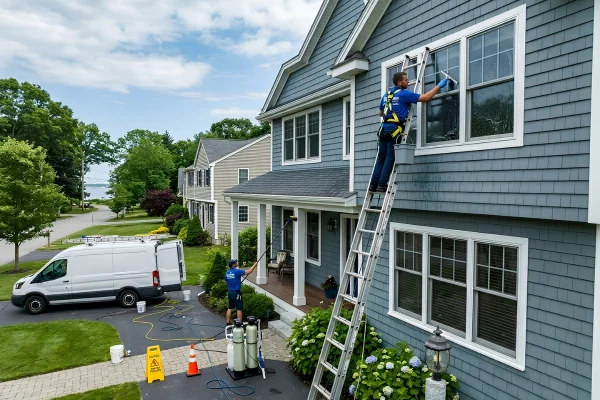
WHEN IS THE BEST TIME TO CLEAN WINDOWS?
The best time to clean windows is during mild, dry, overcast weather when glass stays cool, and cleaning solutions won’t dry too quickly. For most homes and businesses on the South Shore, that makes late spring and early fall the ideal times for professional window cleaning. These seasons provide the best weather conditions while removing months of accumulated dirt, salt, pollen, and environmental contaminants before they can affect visibility or damage your windows.
That said, the best window cleaning schedule isn’t based on the calendar alone. Factors such as coastal exposure, nearby trees, traffic, construction, and the age of your windows all influence how often professional cleaning is needed. Many South Shore properties benefit from all-season window cleaning, with two to four cleanings each year providing the best balance between appearance, maintenance, and long-term protection.
Spring Cleaning Restores Windows After Winter
Spring is the busiest season for South Shore home window cleaning because it removes everything winter leaves behind. Months of road salt, ocean spray, exhaust residue, moisture, and dirt accumulate on glass throughout the colder months, reducing natural light and leaving windows looking dull long after the snow has disappeared.
A professional spring cleaning removes these contaminants before they can permanently stain or etch the glass while restoring clarity for the brighter months ahead. Clean windows allow more natural light indoors, improve curb appeal, and give homeowners the opportunity to identify damaged screens, worn seals, or other maintenance issues before they become more expensive repairs.
One important consideration for South Shore homeowners is spring pollen. Across Norfolk and Plymouth counties, pollen levels often peak from late April through late May. Scheduling window cleaning immediately before a heavy pollen event can leave freshly cleaned glass coated in yellow dust within days. For longer-lasting results, many local window cleaning services recommend scheduling your cleaning toward the end of May or in early June, after the heaviest pollen season has passed.
Fall Cleaning Prepares Windows for Winter
Fall is equally important because it removes the buildup left behind by summer humidity, coastal salt, insects, tree sap, and hard-water spotting before colder temperatures arrive. A thorough cleaning in September or October helps protect glass, frames, and seals while ensuring your home looks its best throughout the holiday season.
Professional window cleaning also becomes more challenging once freezing temperatures arrive. Cold glass, icy conditions, and rapidly evaporating cleaning solutions can reduce cleaning effectiveness and create safety concerns. Scheduling service before winter weather sets in allows technicians to work under ideal conditions while leaving your windows clean and protected for the months ahead.
For many South Shore homeowners and businesses, combining spring and fall service creates the best time of year to clean windows and establishes a dependable window cleaning schedule that keeps glass clearer, extends the life of your windows, and reduces the buildup that becomes harder to remove over time.
HOW EACH SEASON AFFECTS YOUR WINDOWS ON THE SOUTH SHORE
The South Shore’s coastal climate means your windows face different challenges throughout the year. Salt air, pollen, humidity, rain, and falling leaves each leave behind unique contaminants that affect visibility, curb appeal, and the long-term condition of your glass and window frames. Understanding how each season impacts your property makes it easier to build the best window cleaning schedule and determine the best time to clean windows for lasting results.
Winter: Salt, Road Grime, and Reduced Natural Light
Winter leaves some of the toughest buildup on windows. Coastal homes in Scituate, Cohasset, Marshfield, Plymouth, and other shoreline communities are continually exposed to salt spray from the Atlantic, while road salt, vehicle exhaust, and moisture create a stubborn film on exterior glass. Interior condensation can also leave mineral deposits and streaks, especially on older or less energy-efficient windows.
This buildup does more than reduce visibility. Salt residue can gradually etch glass, stain frames, and accelerate wear if it remains in place for months. Dirty windows also block natural daylight during the shortest days of the year, making interior spaces feel darker and increasing glare from the low winter sun.
While winter is not typically the best time of year to clean windows, it’s an excellent time to evaluate their condition and schedule professional service for early spring before contaminants become more difficult to remove.

Spring: Pollen, Rain, and Winter Cleanup
Spring is often considered the best time to clean windows because it removes everything winter leaves behind while preparing your home for the brighter months ahead. Across communities like Norwell, Hingham, Duxbury, and Weymouth, pollen quickly becomes the biggest challenge. Fine yellow pollen combines with morning dew, dust, and rainwater to create a sticky film that clings to glass and reduces clarity.
Spring storms can also wash dirt from roofing, gutters, and siding onto windows, leaving streaks and water spots even after rainfall. Many homeowners are surprised to find that rain doesn’t actually clean windows—it often makes dirty glass appear even worse.
Professional spring cleaning restores clarity, maximizes natural light, and removes corrosive contaminants before they have an opportunity to damage glass or window frames. For the longest-lasting results, many local window cleaning services recommend scheduling service after the heaviest pollen season has passed in late spring.

Summer: Salt Air, Hard Water, and Insect Residue
Summer brings warmer weather, but it also introduces a new set of challenges for South Shore windows. Coastal breezes continually deposit microscopic salt particles on exterior glass, particularly in waterfront communities like Cohasset, Scituate, Duxbury, and Hull. Even homes several miles inland can develop a noticeable haze during extended dry periods.
Sprinkler systems, irrigation overspray, and well water often leave behind hard-water mineral deposits that become increasingly difficult to remove if allowed to bake onto glass in direct sunlight. Insects, tree sap, bird droppings, and airborne dust further reduce visibility while creating stubborn stains on south- and west-facing windows.
For homes near the coast or surrounded by mature landscaping, a mid-summer cleaning is often an important part of an all seasons window cleaning plan, helping preserve clear views and preventing permanent mineral staining.

Fall: Leaves, Organic Debris, and Winter Preparation
Fall is one of the most important seasons for preventative window maintenance. As trees shed their leaves across wooded South Shore communities, organic debris collects on window sills, screens, and frames. Wet leaves release tannins that can stain painted surfaces and contribute to moisture retention around windows if not removed promptly.
Throughout autumn, dirt, dust, spider webs, and lingering summer residue also accumulate before colder weather arrives. Cleaning windows during early to mid-fall removes these contaminants while giving homeowners the opportunity to inspect seals, screens, and frames before freezing temperatures make maintenance more difficult.
Scheduling professional window cleaning before winter helps protect glass, improves curb appeal during the holiday season, and prepares your home for months of snow, ice, and coastal weather.

Seasonal Window Cleaning Comparison
| Season | Primary Buildup | Why It Matters | Best Recommendation |
| Winter | Salt spray, road grime, condensation, exhaust residue | Reduces natural light, increases glare, and prolonged salt exposure can damage glass and frames. | Inspect windows during winter and schedule professional cleaning in early spring. |
| Spring | Pollen, rain residue, winter grime | Blocks natural light, leaves sticky residue, and affects curb appeal after winter. | Schedule cleaning in late spring after peak pollen for longer-lasting results. |
| Summer | Salt air, hard-water spots, insect residue, dust | Mineral deposits and salt haze become harder to remove if left untreated. | Consider mid-summer service, especially for coastal homes or properties with irrigation systems. |
| Fall | Leaves, tannins, dirt, spider webs, organic debris | Prepares windows for winter while preventing staining, moisture damage, and heavy seasonal buildup. | Schedule cleaning in early to mid-fall before freezing temperatures arrive. |
This consistent approach makes it easier for readers to compare seasons at a glance while reinforcing why a professional, year-round window cleaning schedule is the most effective way to keep South Shore homes and businesses looking their best. It also naturally incorporates the primary keyword and several secondary keywords without sounding repetitive, strengthening both SEO performance and user experience.
BUILDING A WINDOW CLEANING SCHEDULE THAT WORKS
A consistent window cleaning schedule is the most effective way to protect your glass, maintain curb appeal, and avoid the buildup that causes long-term damage. The right frequency depends on your property type and location.
Recommended Frequency for Residential Properties
For most South Shore homes, two professional cleanings per year — one in late spring and one in early fall — provide a solid baseline. Homes within close proximity to the coast in towns like Scituate, Cohasset, and Marshfield benefit from three cleanings per year due to accelerated salt accumulation. Properties surrounded by heavy tree cover may also benefit from an additional fall cleaning to address tannin staining from leaf debris.
Interior windows typically need cleaning once per year for most households, though homes with pets, young children, or high cooking activity may benefit from twice-yearly interior cleaning.
Recommended Frequency for Commercial Properties
Commercial properties in Quincy, Weymouth, Brockton, and surrounding South Shore communities generally require more frequent cleaning than residential homes. Storefronts and office buildings with high foot traffic, street-level exposure, and customer-facing glass benefit from monthly or bi-monthly professional cleaning. First impressions matter in commercial settings, and dirty windows signal neglect to customers before they ever walk through the door.
Larger commercial buildings with multiple floors require professional equipment and trained technicians who can work safely at height while delivering consistent, streak-free results across every pane.

TIMING TIPS TO CLEAN WINDOWS
Is It Better to Wash Windows on a Cloudy or Sunny Day?
Overcast days are genuinely better for window cleaning, and this is not just a preference — it is a technical reality. Direct sunlight heats the glass and causes the cleaning solution to dry before it can be properly worked and removed. That rapid drying leaves streaks and residue behind, which defeats the purpose of the cleaning.
A mild, overcast day gives professional cleaners time to work the solution evenly across the glass and remove it cleanly before it sets. This is one reason why professional window cleaners plan their schedules around weather conditions and why the results from a professional cleaning on a cloudy day are consistently better than a rushed cleaning in direct afternoon sun.
Is it too cold to wash windows?
Temperatures below 32 degrees Fahrenheit make window cleaning ineffective and potentially damaging. Cleaning solution can freeze on the glass, and cold frames and seals are more susceptible to cracking or stress from the cleaning process.
Immediately after a heavy pollen event is another time to wait. Cleaning windows during peak pollen drop means the glass will be re-coated within hours. Waiting until pollen levels drop — typically after a rain event that washes pollen from the air — gives your cleaning results a much longer lifespan.
Directly before a forecasted rainstorm is also worth avoiding, not because rain ruins a professional cleaning, but because it is simply not the best use of your investment. A light rain on clean windows does not leave significant residue, but a heavy storm shortly after cleaning can deposit debris from rooflines and gutters back onto the glass.
Can You Use Dawn to Wash Your Windows?
Dish soap like Dawn is a common DIY option, and it does remove surface grease and some dirt. However, it leaves a residue on glass that attracts dust and grime faster than professional cleaning solutions designed specifically for glass. It also does not address hard-water mineral deposits, salt film, or oxidation on frames.
For routine touch-ups between professional cleanings, a small amount of diluted dish soap on a microfiber cloth can work in a pinch, but it is not a substitute for professional-grade cleaning on a full home or commercial property.
THE VALUE OF PROFESSIONAL WINDOW CLEANING FOR SOUTH SHORE PROPERTIES
Professional window cleaning is about much more than achieving streak-free glass. It is an important part of routine property maintenance that helps protect your windows from long-term damage, improves curb appeal, increases natural light, and preserves the overall appearance of your home or business. Whether you follow a seasonal window cleaning schedule or invest in all seasons window cleaning, routine service helps maximize the life and performance of one of your property’s most visible features.
Protects Glass, Frames, and Window Components
Windows are exposed to the elements every day, especially along the South Shore where salt air, road salt, pollen, moisture, and airborne contaminants are part of everyday life. Over time, these materials bond to the glass and can cause staining, mineral buildup, oxidation, and even permanent etching if they aren’t removed regularly.
Professional window cleaning safely removes corrosive deposits before they cause lasting damage while also cleaning frames, sills, and tracks where dirt and moisture often collect. Regular maintenance helps extend the life of your windows, improves their performance, and may reduce the need for costly repairs or premature replacement.
Enhances Curb Appeal and Protects Property Value
Clean windows make an immediate difference in how a property looks from the street. They create a brighter, more polished appearance and demonstrate that a home or commercial building is well cared for. In contrast, dirty or hazy windows can make even a beautifully maintained property appear neglected.
For homeowners throughout Hingham, Duxbury, Marshfield, Plymouth, and the surrounding South Shore communities, professional window cleaning is one of the simplest and most affordable ways to enhance curb appeal. It is especially valuable before listing a home for sale, hosting guests, or preparing for seasonal gatherings, when first impressions matter most.
Maximizes Natural Light and Interior Comfort
Even a thin layer of dirt, pollen, or salt residue can reduce the amount of natural daylight entering your home. Cleaner windows allow more sunlight to reach interior spaces, making rooms feel brighter, larger, and more inviting throughout the year.
Greater natural light can also reduce the need for artificial lighting during the day, while improving outdoor views and creating a more comfortable living or working environment. For commercial buildings with extensive glass, maintaining clean windows also helps present a professional image to customers and clients.
Improves Safety and Identifies Maintenance Issues Early
One of the often-overlooked benefits of hiring experienced professionals is that every cleaning also serves as a visual inspection of your windows. During service, technicians can often spot developing issues such as cracked glass, damaged seals, deteriorating caulking, worn screens, moisture intrusion, or frame damage before they become more expensive repairs.
Working with local window cleaning services that understand the South Shore’s coastal climate means your windows receive maintenance tailored to the conditions they experience throughout the year. Combined with the best window cleaning schedule, routine professional service helps protect your investment while keeping your home or business looking its best in every season.

KEEP YOUR WINDOWS LOOKING GREAT ALL YEAR LONG
Knowing the best time to clean windows is only part of the equation. Following a consistent window cleaning schedule helps protect your glass, maximize natural light, improve curb appeal, and extend the life of your windows throughout every season. Whether your property is exposed to coastal salt air, heavy pollen, mature trees, or everyday dirt and grime, routine professional maintenance is one of the simplest ways to preserve your home’s appearance and value.
At South Shore Window Cleaning, we provide reliable, high-quality service tailored to the unique needs of homes and businesses across the region. From one-time cleanings to customized all seasons window cleaning plans, our experienced team uses professional equipment and proven techniques to deliver streak-free, long-lasting results while helping protect your investment.
We’re proud to serve homeowners and businesses throughout Quincy, Weymouth, Hingham, Scituate, Cohasset, Marshfield, Duxbury, Plymouth, Brockton, Norwell, and surrounding South Shore communities with dependable, detail-oriented service and exceptional customer care.
If you’re ready to enjoy cleaner windows and discover the best window cleaning schedule for your property, we’re here to help. Contact South Shore Window Cleaning today for a free, no-obligation estimate. We’ll evaluate your home’s unique needs, recommend the ideal cleaning frequency, and show you how to schedule professional window cleaning services that fit your property, your budget, and your schedule.
Frequently Asked Questions
When is the best time of year to clean windows in Massachusetts?
The best time of year to clean windows in Massachusetts is typically late spring after peak pollen season and early fall before colder weather arrives. This schedule removes winter salt, pollen, summer grime, and coastal residue while keeping windows cleaner longer and protecting glass throughout the year.
Is it better to wash windows on a cloudy or sunny day?
Cloudy, mild days provide the best conditions for window cleaning because cleaning solutions dry more slowly, reducing streaks and residue. Direct sunlight heats the glass, causing cleaners to evaporate too quickly. Professional window cleaners often schedule service when weather conditions produce the best possible results.
How often should South Shore homes have their windows professionally cleaned?
Most South Shore homes benefit from professional window cleaning twice a year—once in late spring and again in early fall. Homes near the coast or surrounded by mature trees often benefit from three or four cleanings annually as part of an all seasons window cleaning schedule.
When should you avoid cleaning your windows?
Avoid cleaning windows during freezing temperatures, heavy rain, strong winds, or when glass is hot from direct sunlight. If pollen counts are extremely high, waiting until after peak pollen season often provides longer-lasting results and helps keep freshly cleaned windows looking clear.
Can you use Dawn dish soap to clean windows?
A small amount of diluted Dawn dish soap can remove light dirt, but it isn’t designed for professional window cleaning. It may leave residue and won’t effectively remove hard-water stains, salt buildup, or mineral deposits. Professional cleaning solutions produce clearer, longer-lasting, streak-free results.
Why do my windows look dirty again after it rains?
Rain itself doesn’t usually make clean windows dirty. Instead, it washes pollen, dust, roof debris, and airborne contaminants onto already dirty glass. Professionally cleaned windows generally stay cleaner after rainfall because dirt and residue have been thoroughly removed before the rain arrives.
Is professional window cleaning worth the cost?
Yes. Professional window cleaning improves curb appeal, maximizes natural light, protects glass from mineral buildup and salt damage, and helps extend the life of your windows. Regular maintenance often prevents more costly repairs while keeping your home or business looking well-maintained.
What is the best window cleaning schedule for most homes?
The best window cleaning schedule depends on your property’s location and environment. Most homeowners benefit from spring and fall cleanings, while coastal properties, homes beneath large trees, or houses near busy roads often require three or four professional cleanings each year.
Does living near the ocean mean I should clean my windows more often?
Yes. Coastal homes are exposed to airborne salt that settles on glass and window frames throughout the year. Regular professional cleaning helps remove corrosive salt deposits before they can cause permanent staining, etching, or deterioration, making more frequent service beneficial for waterfront properties.
How do I know it’s time to schedule professional window cleaning?
If your windows appear hazy, streaked, or noticeably reduce natural light, it’s probably time for service. Difficulty seeing clearly outside, visible water spots, pollen buildup, or salt residue are all signs it’s time to schedule professional window cleaning services.
Does professional window cleaning include screens and window tracks?
Many local window cleaning services offer optional or complete cleaning of screens, sills, and tracks along with the glass. Cleaning these areas removes accumulated dirt, pollen, insects, and debris while improving airflow and helping your entire window system function more efficiently.
Can professional window cleaning remove hard-water stains?
Light to moderate hard-water stains can often be removed using specialized professional techniques and products. Severe mineral deposits that have etched into the glass may require restoration services or, in extreme cases, glass replacement if the damage has become permanent.
Are spring and fall really the best seasons for window cleaning?
For most South Shore properties, yes. Spring removes winter salt, road grime, and pollen, while fall clears away summer salt, insects, and organic debris before colder weather arrives. Together, these seasonal cleanings provide the foundation for an effective year-round maintenance plan.
Why should I hire a local window cleaning company?
Choosing local window cleaning services means working with professionals who understand the South Shore’s coastal climate, seasonal weather patterns, and common window maintenance challenges. Their local experience allows them to recommend the right cleaning frequency and techniques for your property’s specific needs.