Skip to content
If you own a home or business on the South Shore of Massachusetts, your windows face more than everyday dirt. Coastal salt air, heavy spring pollen, summer humidity, and winter road spray quickly leave glass looking dull and spotted. Over time, that buildup can do more than hurt curb appeal—it can permanently damage your windows if left untreated. Knowing how often windows should be cleaned in a coastal environment is what keeps your glass clear and protected all year long.
So, how often should windows be professionally cleaned? For most South Shore homes, twice a year is the minimum. Coastal and heavily wooded properties often benefit from three to four cleanings annually, while commercial storefronts typically need monthly service to maintain a professional appearance.
The right schedule depends on your property’s location, surrounding environment, and how quickly contaminants accumulate—something homeowners in Hingham, Scituate, Cohasset, Duxbury, and other local areas know all too well. In this guide, we’ll explain the ideal window cleaning frequency for South Shore homes and businesses, the factors that affect it, and how regular professional cleaning helps protect your investment.

Key Takeaways
● Most South Shore homes benefit from professional window cleaning at least twice a year to maintain appearance and prevent long-term damage.
● Coastal, waterfront, and heavily wooded properties often require three to four cleanings annually because of salt, pollen, and organic buildup.
● Commercial storefronts and high-traffic businesses should schedule monthly or bi-weekly cleaning to maintain a professional appearance.
● Regular window cleaning helps prevent glass etching, mineral stains, mold growth, and frame deterioration, extending the life of your windows.
● Professional window cleaners use purified water, specialized tools, and proven techniques to deliver streak-free results that DIY methods rarely match.
● A customized cleaning schedule protects curb appeal, property value, and energy efficiency while reducing the risk of expensive repairs.
● The South Shore’s coastal climate makes more frequent window cleaning essential compared to many inland Massachusetts communities.
How Often Should Windows Be Cleaned: The Honest Answer by Property Type
There isn’t a one-size-fits-all window cleaning schedule. Your property’s location, exposure to the elements, and use all affect how quickly dirt, salt, pollen, and other contaminants build up. Here’s what most South Shore homeowners and business owners can expect.
Residential Window Cleaning Frequency
For most South Shore homes, professional residential window cleaning twice a year is the ideal starting point—once in late spring, after pollen season, and again in late fall, before winter. Homes closer to the coast, particularly in communities like Scituate and Duxbury, are exposed to more salt air and often benefit from three to four cleanings per year. Regular service removes damaging buildup before it can etch the glass, stain frames, or shorten your windows’ lifespan.
Commercial Window Cleaning Frequency
Commercial properties require more frequent cleaning because first impressions matter. Most storefronts, restaurants, and offices should schedule professional commercial window cleaning monthly, while high-traffic businesses may benefit from biweekly service. Whether you operate a retail shop in Quincy or a waterfront business in Hingham, clean windows help create a more welcoming appearance, reinforce professionalism, and keep your property looking well maintained year-round.
The best window cleaning schedule depends on your property’s unique conditions. A professional assessment can help determine the right maintenance plan, protecting your windows while keeping your home or business looking its best year-round.
Professional Tip: The best window cleaning schedule for South Shore homes depends on your property’s location and exposure to salt, pollen, and seasonal debris. Most experts recommend professional service at least twice a year. As a trusted local window cleaning company, we can recommend the ideal schedule for lasting results and cleaner, healthier windows.

Why the South Shore Environment Demands More Frequent Cleaning Than Inland Areas
South Shore homes and businesses face environmental conditions that accelerate dirt, mineral buildup, and organic growth on windows. Unlike many inland areas of Massachusetts, coastal communities contend with salt air, changing seasons, and higher humidity—all of which shorten the time between cleanings.
Coastal Salt Air
Salt air is the biggest reason coastal properties require more frequent window cleaning. Fine salt particles settle on glass, creating a hazy film that rain cannot remove. Left in place, salt can gradually etch the surface, reducing clarity and shortening the life of your windows. On exposed waterfront glass, we often see this haze return within a few weeks of a cleaning.
Hard Water Deposits
Sprinklers, irrigation systems, and mineral-rich water leave behind stubborn hard water spots that bond to the glass. Over time, these deposits become increasingly difficult to remove and may require specialized restoration if left too long.
Heavy Spring Pollen
Each spring, pollen coats windows with a yellow-green film that dulls their appearance and blocks natural light. Homes surrounded by mature trees often experience heavier buildup, making a post-pollen professional cleaning one of the best times to restore clear glass.
Summer Humidity and Mildew
Warm, humid weather creates ideal conditions for algae and mildew to develop along window frames, sills, and seals. While the glass may appear clean, moisture-related growth can damage surrounding materials if it isn’t removed regularly.
Falling Leaves and Organic Debris
During the fall, leaves, sap, and organic debris collect around window tracks and sills. As moisture mixes with this debris, it can stain frames, clog drainage paths, and create conditions that encourage mold and wood rot.
Winter Road Salt and Grime
Winter brings another layer of contamination. Road salt, slush, and freeze-thaw cycles leave a stubborn film on lower windows that ordinary rain cannot wash away. Cleaning before and after winter helps prevent long-term buildup and staining.
The Best Window Cleaning Schedule for South Shore Homes
| Environmental Factor | Primary Problem | Recommended Cleaning Frequency |
| Coastal salt air | Salt film, glass etching, reduced clarity | Every 3–4 months for coastal homes |
| Hard water deposits | Mineral spots and permanent staining | Remove as soon as buildup appears |
| Spring pollen | Thick pollen film blocks light | Schedule a cleaning after pollen season |
| Summer humidity | Algae, mildew, and frame deterioration | Monitor throughout the summer |
| Fall leaves and debris | Stained sills, clogged tracks, organic buildup | Clean before winter |
| Winter road salt | Salt spray, grime, freeze-thaw residue | Clean after winter and before spring |
Together, these conditions explain why many South Shore properties need professional window cleaning more often than inland homes. A maintenance schedule tailored to your property’s location helps protect your windows, improve curb appeal, and prevent costly long-term damage.
Professional Tip: Many homeowners ask, “Should I have my windows professionally cleaned, or handle the job myself?” DIY methods can remove light dirt, but professional window cleaning provides streak-free results, removes stubborn buildup, and helps protect glass and frames—especially in coastal environments where salt and pollen accumulate quickly.

The Right Tools and Methods Professional Window Cleaners Use
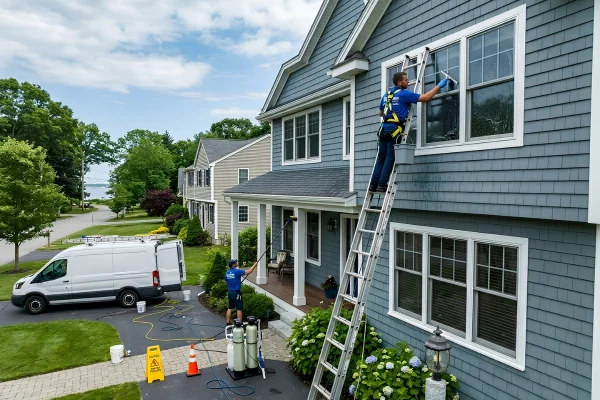
Professional window cleaning isn’t just about working harder—it’s about using the right equipment and techniques, many of which are inaccessible to homeowners. These specialized tools help deliver streak-free results while protecting your glass, frames, and surrounding surfaces.
● Purified Water Systems – Water filtered through reverse osmosis or deionization removes minerals that cause spots and streaks, leaving glass crystal clear without residue.
● Water-Fed Poles – Extendable poles allow technicians to safely clean upper-story windows from the ground while continuously rinsing glass with purified water.
● Professional Squeegees – High-quality rubber squeegees remove water evenly for a smooth, streak-free finish that household tools rarely achieve.
● Scrubber Applicators – Designed to loosen salt, pollen, dirt, and other stubborn contaminants before the glass is rinsed and squeegeed clean.
● Professional Cleaning Solutions – Commercial-grade cleaners break down grime without damaging glass, window frames, or protective coatings.
● Screen Cleaning Equipment – Window screens are cleaned separately to prevent trapped dirt and dust from immediately transferring back onto freshly cleaned glass.
● Track and Sill Cleaning Tools – Brushes and detailing tools remove debris, leaves, and moisture from tracks and sills, helping reduce mold growth and improve window performance.
● Proper Technique – Trained technicians use the correct angles, pressure, and cleaning methods to avoid streaks, drips, and missed spots.
Combined with hands-on experience, these tools produce cleaner, longer-lasting results than most DIY methods while helping protect your windows from premature wear and environmental damage.
What Happens When Windows Go Too Long Without Cleaning
Dirty windows aren’t just a cosmetic issue. Over time, dirt, salt, moisture, and organic buildup can damage the glass, frames, and seals, leading to expensive repairs that regular maintenance often prevents.
● Glass Etching – Salt, hard-water minerals, and environmental contaminants gradually etch glass when left untreated. Once this cloudy damage develops, standard cleaning won’t remove it, and restoration or replacement may be the only solution.
● Permanent Staining – Mineral deposits, oxidation, and organic buildup can leave lasting stains that become harder to remove over time. Regular professional cleaning prevents these contaminants from bonding permanently to the glass.
● Frame and Sill Damage – Moisture trapped around dirty frames and sills encourages mold, mildew, and wood rot, threatening the structural integrity of your windows.
● Failed Window Seals – Debris and moisture accelerate wear around window seals, allowing drafts and moisture in. Damaged seals reduce comfort, increase energy costs, and may require costly repairs or full replacement.
● Higher Long-Term Costs – Routine cleaning is far less expensive than repairing etched glass, replacing damaged frames, or installing new windows. Preventative maintenance protects your investment and helps avoid unnecessary repair bills.
Regular professional window cleaning keeps your windows looking their best while preventing the gradual damage that often goes unnoticed until repairs become much more expensive.

How Professional Window Cleaning Affects Curb Appeal and Property Value
Clean windows do more than brighten your view. They improve your property’s appearance, protect your investment, and help create a positive first impression for visitors, customers, and potential buyers.
● Boosts Curb Appeal – Removing streaks, salt film, and grime instantly makes a home or business look cleaner and better maintained, without the cost of major exterior improvements.
● Creates Better First Impressions – Clean windows signal that a property has been well cared for—an easy way to make a lasting impression on guests, customers, or prospective buyers.
● Increases Real Estate Appeal – Professional cleaning lets more natural light in, improves listing photos, and helps buyers focus on a property’s best features rather than visible dirt.
● Protects Your Investment – Replacing windows can cost thousands. Regular cleaning removes contaminants that cause etching, staining, and frame deterioration, extending the life of your existing windows.
● Delivers Long-Term Value – A consistent maintenance schedule keeps windows performing their best and protects one of your home’s most visible exterior features.
Quick Comparison: Clean vs. Neglected Windows
| Factor | Professionally Cleaned Windows | Neglected Windows |
| Appearance | Bright, streak-free, and inviting | Cloudy, spotted, and dull |
| Curb Appeal | Enhances your home’s exterior | Makes the property look poorly maintained |
| Natural Light | Lets in more daylight | Dirt and buildup reduce brightness |
| Buyer Perception | Creates a strong first impression | Can signal deferred maintenance |
| Window Condition | Protected from salt, mineral, and organic buildup | Increased risk of etching and permanent staining |
| Energy Efficiency | Helps preserve frames and seals | Moisture and debris can contribute to seal deterioration |
| Long-Term Costs | Routine maintenance helps avoid expensive repairs | Greater chance of restoration or replacement costs |
Professional Tip: Can South Shore homeowners get their windows cleaned year-round? In most cases, yes. Our window cleaning services are available year-round, with spring and fall being the most popular times and winter freezes making scheduling more challenging. For most homeowners, professional cleaning is worth it over DIY—especially in a coastal climate.

Choosing the Right Window Cleaning Schedule for Your South Shore Property
Every property is different, so the ideal window cleaning schedule depends on your location, surroundings, and how quickly dirt and environmental contaminants accumulate. Use the guide below to determine what schedule may be right for your home or business.
Factors That May Require More Frequent Cleaning
● Coastal Location – Homes near the ocean or salt marshes accumulate salt spray faster and often benefit from cleaning every 3–4 months.
● Heavy Tree Coverage – Trees increase pollen, sap, leaves, and organic debris that collect on windows year-round.
● Large or High-Visibility Windows – Expansive glass surfaces show dirt more quickly and benefit from more frequent maintenance.
● Busy Commercial Properties – Storefronts, restaurants, and offices with high customer traffic should be cleaned regularly to maintain a professional appearance.
Recommended Cleaning Schedule
| Property Type | Recommended Frequency |
| Inland residential homes | Twice per year |
| Coastal residential homes | Three to four times per year |
| Heavily wooded properties | Three times per year |
| Vacation or waterfront homes | Three to four times per year |
| Retail storefronts | Monthly |
| Restaurants and high-traffic businesses | Bi-weekly to monthly |
| Office buildings | Monthly or as needed |
The best schedule balances appearance, protection, and long-term maintenance. A professional assessment can help determine the right cleaning frequency for your property’s specific location and environmental conditions.
Give Your Windows the Care They Deserve
Clean windows do more than improve your view—they protect your investment, enhance curb appeal, and help your home or business make the best possible impression. With regular professional window cleaning, you can prevent salt buildup, mineral staining, and environmental damage before they become costly problems.
South Shore Window Cleaning proudly serves homeowners and businesses throughout Quincy, Weymouth, Hingham, Scituate, Cohasset, Marshfield, Duxbury, Plymouth, Brockton, Norwell, and surrounding South Shore communities. Every service includes professional-grade purified water systems, expert cleaning techniques, and meticulous attention to your glass, screens, tracks, and sills.
Whether you’re looking for a one-time cleaning or a customized maintenance plan, our team is here to help. Contact South Shore Window Cleaning today for a professional review and estimate, and we’ll recommend the ideal cleaning schedule based on your property’s location, environmental conditions, and unique needs.

Frequently Asked Questions
How often should the average homeowner have their windows professionally cleaned?
Most South Shore homeowners should schedule professional window cleaning at least twice a year. Coastal properties and homes surrounded by trees often benefit from three to four cleanings annually to prevent salt buildup, pollen, and permanent glass staining.
What are common mistakes when cleaning windows yourself?
Common DIY mistakes include using tap water, cleaning in direct sunlight, using paper towels, and skipping screens or tracks. These methods often leave streaks, residue, or trapped dirt that professional tools and purified water systems are designed to prevent.
What is the best way to clean exterior windows?
Professional window cleaners use purified water, professional cleaning solutions, scrubber applicators, and high-quality squeegees. This combination removes dirt, salt, pollen, and mineral deposits while leaving windows streak-free and residue-free.
Why do professional window cleaners use purified water?
Purified water has minerals removed through reverse osmosis or deionization, preventing spots and streaks as it dries. It also allows technicians to safely clean upper-story windows with water-fed poles without leaving residue.
How much does professional window cleaning cost?
Most South Shore homeowners can expect professional window cleaning to cost between $150 and $400 for a typical home. Pricing depends on the home’s size, window count, accessibility, and the amount of dirt or mineral buildup.
Does rain clean your windows?
No. Rain can rinse away loose dust, but it doesn’t remove salt, pollen, mineral deposits, or organic buildup. In many cases, rain actually leaves behind additional spots and residue, especially on already dirty windows.
Can dirty windows become permanently damaged?
Yes. Salt, hard water minerals, and environmental contaminants can etch glass over time. Once etching occurs, standard cleaning won’t restore the surface, making regular professional maintenance the most cost-effective solution.
Does professional window cleaning help windows last longer?
Yes. Routine cleaning removes contaminants that damage glass, frames, and seals. Preventing salt buildup, mildew, and hard water deposits helps extend the life of your windows and reduces the likelihood of expensive repairs.
When is the best time of year to clean windows?
Late spring and late fall are ideal for most South Shore homes. These cleanings remove heavy pollen, prepare windows for winter, and help prevent seasonal buildup from causing long-term damage.
Is professional window cleaning worth it?
For most homeowners, yes. Professional cleaning improves curb appeal, increases natural light, protects your windows from long-term damage, and saves time while delivering results that are difficult to achieve with DIY methods.
How long does professional window cleaning take?
Most residential window cleaning appointments take two to four hours, depending on the home’s size, number of windows, and whether interior glass, screens, tracks, and sills are included.
Do professional window cleaners clean screens and tracks?
Most professional services include cleaning window screens, tracks, and sills, as well as the glass. Removing dirt and debris from these areas helps keep windows cleaner longer and protects the entire window system.