Skip to content
There is a specific kind of frustration that comes with a beautiful South Shore sunset being obscured by a layer of sea salt and pollen on your second-story glass. We’ve all been there: the first-floor windows look great, but those high-reach panes are starting to look like they’ve been through a sandstorm. If you are currently staring at your extension ladder, wondering how to clean second-story windows without a trip to the ER, you’re in the right place.
Taking care of your home shouldn’t feel like a high-wire act. While cleaning high windows is a challenge, it can be managed with the right gear and a healthy dose of common sense. However, there is a fine line between a successful DIY Saturday and a dangerous mistake. Let’s break down how to get those views back safely, and more importantly, how to know when it’s time to keep your feet on the ground.
Why Cleaning High Windows Is Different From Ground-Level Windows

When you’re working at ground level, you have the luxury of leverage. You can scrub a stubborn bird dropping or a streak of salt with ease because your feet are planted. Once you move to second-story window cleaning, everything changes. You are suddenly fighting gravity, wind resistance, and the physical limitations of your reach.
The gear changes, too. You aren’t just using a spray bottle and a paper towel; you’re managing exterior cleaning tools that get heavy and unwieldy the higher they go. On the South Shore, we also deal with coastal winds that can turn a simple window squeegee into a sail. Understanding that this is a specialized task—not just “regular cleaning, but higher up”—is the first step in window cleaning safety.
How to Clean Second-Story Windows Safely
If you’re set on tackling the grime yourself, you need to move away from the bucket-and-rag mindset. The goal for any homeowner should be to minimize the time spent on a ladder while maximizing the quality of the shine.
Must-Have Exterior Window Cleaning Tools
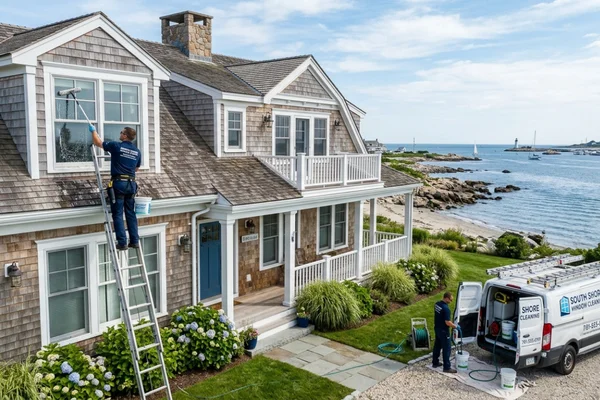
If you want to clean tall windows like a pro, invest in a high-quality telescopic extension pole. Look for one with a swivel head that allows the squeegee to maintain contact with the glass, even at an angle.
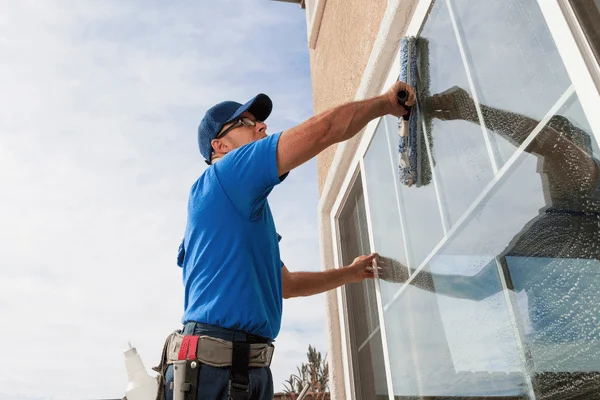
For the actual scrubbing, a microfiber strip washer (often called a mop) is far superior to a sponge. It holds more water and agitates the salt film much more effectively. If you are cleaning second-floor windows frequently, a water-fed pole system that attaches to your garden hose can be a total game-changer.
Proper Window Cleaning Safety Practices to Live By
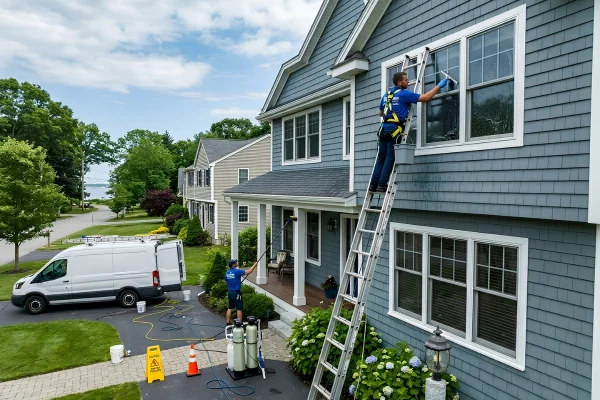
Before you climb, do a perimeter check. Ensure your ladder is on a flat, solid surface. New England’s sandy soil can be deceptive and cause a ladder foot to sink unexpectedly. Use the 4-to-1 rule: for every four feet of height, the base of the ladder should be one foot away from the wall.
Wear shoes with excellent grip, and never, ever overreach. If you have to shift your weight to the side to hit a corner, climb down and move the ladder. It takes an extra minute, but it prevents the most common cause of ladder-related injuries.
The Hidden Risks of DIY Second-Floor Window Cleaning
Second-floor window cleaning is one of the few household maintenance tasks where a small mistake can lead to serious injury or costly damage. Many homeowners underestimate how quickly conditions like unstable footing, overreaching, or fatigue can create problems. DIY attempts at upper-level window cleaning commonly lead to issues such as:
- Fall and Injury Risks: Ladder fatigue sets in quickly when your muscles are tensed for balance, significantly increasing the chance of a slip.
- Property Damage: Unpadded ladders can easily dent aluminum siding, crack vinyl tracks, or scratch expensive composite trim.
- Structural Stress: Resting heavy equipment directly against a window frame can cause seal failure or glass breakage.
- Dropped Tool Damage: A falling brass squeegee or telescopic pole can easily shatter a first-floor table or ruin delicate landscaping below.
- Physical Strain: The repetitive motion of scrubbing at height often leads to significant back and shoulder strain.
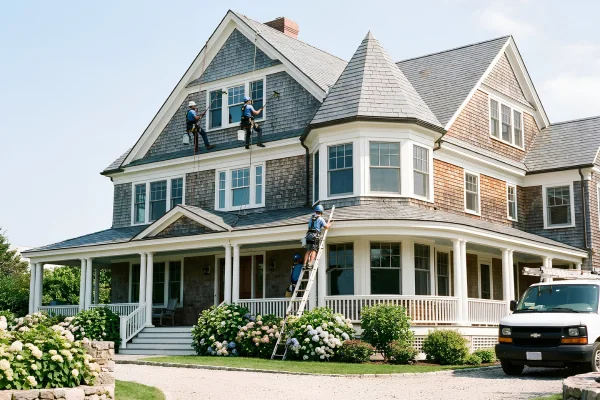
Because of these risks, many homeowners choose local professional window cleaning services for second-story windows. Experienced crews use proper safety procedures and equipment designed specifically for multi-story cleaning, helping protect both the property and the people doing the work.
When to Put the Ladder Away: Hiring Local Professional Window Cleaning Services

So, when is it time to put the bucket away? There are a few scenarios where DIY is simply not the move:
- True Tall Windows: If your home has a grand foyer or great room with windows that reach 25–30 feet, standard consumer ladders won’t cut it.
- Difficult Terrain: If your home is built on a slope or has delicate landscaping directly under the windows, pro equipment is required to bridge the gap safely.
- Time Constraints: A pro can clean a whole house in a few hours. For a homeowner, second-story window cleaning can easily eat up an entire weekend.
- Glass Condition: If your windows have baked-on minerals or hard water staining, DIY chemicals usually won’t be enough to restore the clarity.
In situations like these, working with local professional window cleaning services provides a safer and more efficient solution. Experienced crews have the equipment and training needed to reach difficult areas, protect surrounding surfaces, and restore glass without damaging frames or seals. For many homeowners, hiring a professional ultimately saves time while ensuring the job is done thoroughly and safely.
Professional Window Cleaning vs. DIY: What’s the Real Difference?

When you hire a pro, you’re paying for the invisible details. A professional crew will clean the tracks, wipe down the sills, and check your window seals for signs of failure or rot. They have the expertise to handle baked-on salt and bird debris without scratching the glass. While a DIY job might save you a few dollars today, professional cleaning saves you a weekend of labor and provides a level of clarity that stays cleaner for longer.
Not sure if your windows require professional equipment? We’re happy to assess your home and give you an honest take on the safest approach.
If you’ve been stressing over how to clean second-story windows, remember that safety is the ultimate metric of a successful project. Whether you choose to gear up with extension poles or decide that your Saturday is better spent at the beach while a crew handles the heights, the goal is a clear view and a safe home.
Frequently Asked Questions
1. Can I clean second-story windows from the inside?
Many modern double-hung windows feature tilt-in sashes for easy cleaning. By releasing the internal tabs, you can swing the exterior glass toward you while standing safely inside. However, this does not work for fixed picture windows, transoms, or older architectural styles. For those panes, you will still need an extension pole or professional assistance to reach the exterior glass.
2. Is it safe to use a pressure washer for second-floor window cleaning?
We strongly advise against this. High-pressure streams can blow out the thermal seals between double-pane windows, leading to permanent fogging. Furthermore, the force can drive water behind your siding or through window frames, causing hidden mold and interior water damage. Stick to low-pressure poles or manual scrubbing.
3. What is the best soap to use when learning how to clean second-story windows?
A mixture of professional-grade dish soap and warm water is superior to blue-bottled sprays. The soap provides the slip required for a squeegee to glide smoothly without skipping. For heavy salt air, a splash of white vinegar helps break through minerals. The real secret to a streak-free finish, however, is a thorough final rinse.
4. How often should I clean my high windows in Massachusetts?
A twice-yearly schedule in the spring and late fall is ideal for most South Shore homes. This clears away abrasive salt film before winter and removes summer pollen. If you live directly on the water, consider a quarterly service to prevent permanent salt etching on the glass.
5. What should I do if I drop something while cleaning?
If a tool falls while you are on a ladder, let it go. Reaching to catch a falling object is a primary cause of ladder tip-overs. Climb down slowly to retrieve the item, and re-verify your ladder’s stability before heading back up.